
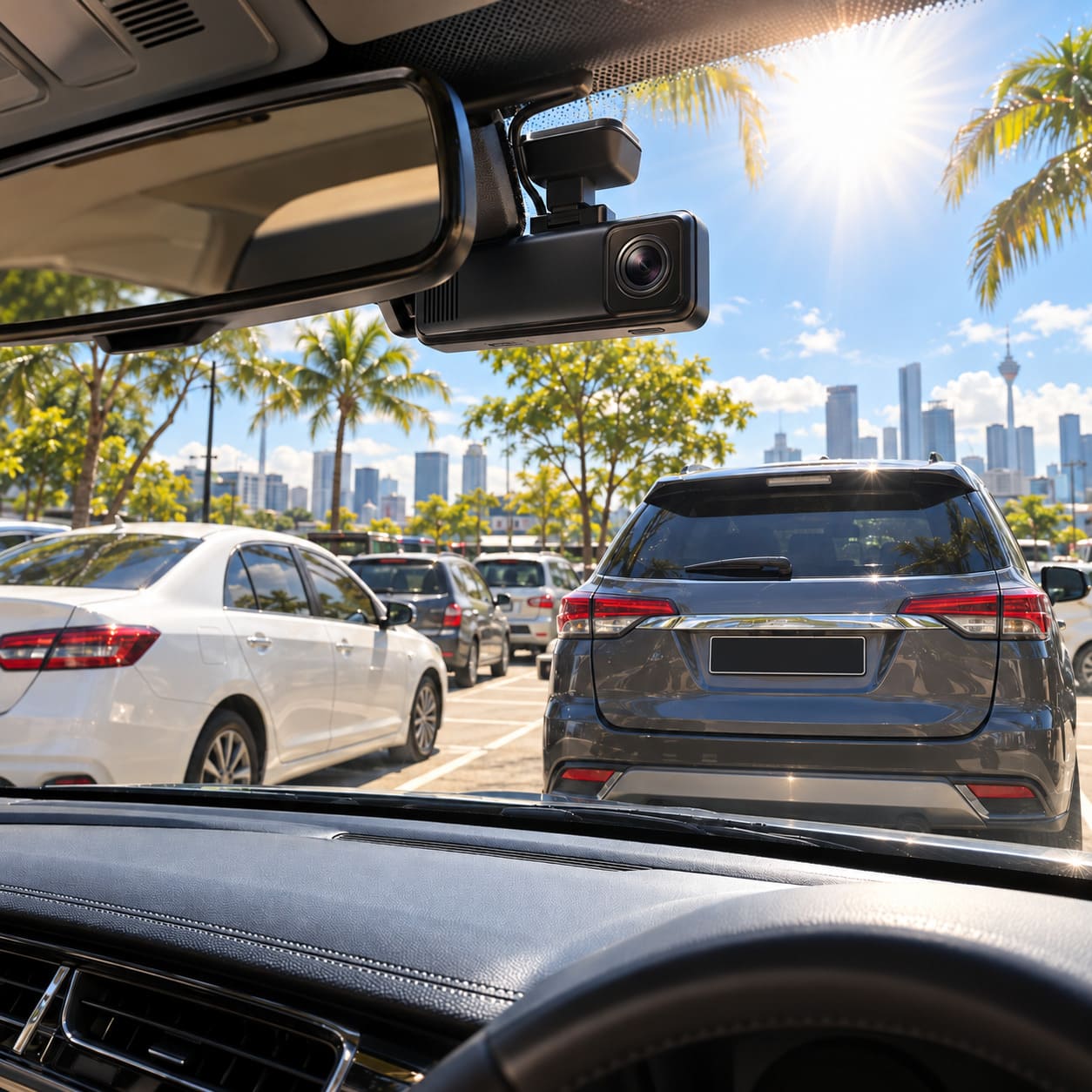
Choose a dash cam built around a supercapacitor, with an automatic high temperature cut off and an energy saving parking mode, then match it with a strong image sensor and high bitrate so license plates stay readable. That combination is what keeps the camera safe in a parked car and keeps the footage usable as evidence.
In Puchong and across Selangor, daily parking often means open lots, outdoor visitor bays, and long hours under direct sun. Cabin temperatures can rise into the range where typical lithium battery dash cams degrade or fail. Below, we share the same engineering checks we use when we help customers on TRIO shortlist models that can survive the heat without sacrificing plate clarity.
Why parked car heat in Puchong breaks ordinary dash cams
Heat damage is usually not dramatic at first. It starts as random shutdowns, corrupted files, and memory card errors, then becomes swelling or failure in battery based units. Research on dash cam power designs shows why: supercapacitors are commonly rated to operate up to 85C, while lithium ion batteries can start degrading, swelling, or failing above 60C. Inside a car parked under the Malaysian sun, reaching that battery stress range is realistic.
It also helps to read spec sheets correctly. A dash cam operating temperature range is the range where it can record normally. Storage temperature is the range it can survive while turned off. In a hot parked car, the dash cam may need to stop recording to stay within its operating limit, then simply survive the higher ambient temperature until conditions drop.
A step by step buying checklist for heat tolerance in Malaysia
Use this checklist before you compare models or packages. It is designed for real parking conditions around Puchong, where a car might sit for hours while you are at work, at a condo, or doing school runs.
- Power type: prioritize a supercapacitor design over a lithium battery design for heat resilience.
- Thermal protection: confirm the dash cam has an automatic high temperature cut off feature that can shut the unit down around a critical threshold (often in the 75C to 80C range, depending on the model) to prevent damage during parking mode.
- Parking mode efficiency: look for energy saving or radar based parking modes that keep the camera in low power standby instead of keeping the image sensor active all day.
- Sensor first, resolution second: choose modern sensor technology (for example Sony STARVIS 2 class sensors) to handle glare and low light, rather than buying on 4K labels alone.
- Bitrate: verify the camera records at a high bitrate. Research based guidance suggests 25 Mbps or higher for 4K as a useful benchmark to reduce compression artifacts that can blur plate characters.
- Memory endurance: plan for a High Endurance or Industrial Grade microSD card, since heat plus constant rewriting can kill standard cards quickly.
- Hardwiring plan: confirm your parking mode power source and cut off settings (hardwire kit with battery protection, or a dedicated battery pack) before installation.
- Mounting and setup: mount high behind the rear view mirror for a cleaner view and less direct sun exposure than a lower dashboard position, then set the bitrate and HDR options the camera offers.
If you want us to sanity check your shortlist against Puchong parking habits, you can browse options on TRIO and send us your typical parking duration and vehicle type.
Capacitor vs battery: the hardware decision that decides heat survival
From an engineering perspective, the power storage inside the dash cam is the first filter, because it affects both safety and long term reliability. Supercapacitors handle high temperatures far better than lithium ion batteries. Research summaries commonly cite operation ratings up to 85C for supercapacitors, while lithium ion batteries can begin degrading above 60C.
There is a practical tradeoff: a supercapacitor is not intended to run the camera for long periods after the car is turned off. Its job is to provide stable power and allow a clean file save and safe shutdown. For heat prone daily parking, that is usually what you want. The dash cam can protect its recordings and protect itself, instead of trying to stay awake on a battery that is being cooked.
If you are shopping across multiple dashcam brands, treat “supercapacitor” as a must have filter for Malaysia outdoor parking, especially if you plan to use parking surveillance.
Parking mode that stays reliable without cooking the camera or draining the car
Parking mode is where heat and electrical risk meet. Standard motion detection can keep the image sensor active for long stretches, which increases power draw and heat generation. Research on advanced parking systems describes energy saving or radar based modes that reduce this load by keeping the dash cam in a low power standby state and waking it only when needed, such as after an impact detected by the G sensor, or motion in a monitored zone using radar based detection (depending on the model).
Two limitations should be part of your decision. First, a high temperature cut off is a protective feature, but it also means the camera can stop recording during extreme heat, potentially missing an incident. Second, even the most efficient parking mode still needs a safe power plan.
Hardwiring vs dedicated battery packs in Malaysia daily parking
Hardwiring can be a clean solution, but only if it is done correctly. Improper hardwiring can drain the car battery regardless of dash cam features, so professional installation is recommended. Some drivers prefer a dedicated dash cam battery pack (for example, research mentions products like a Cellink NEO) to separate dash cam usage from the car battery, especially for long parking sessions.
Installation tips that match Malaysia parking realities
- If your car sits outdoors for long hours, prioritize energy saving parking mode over continuous recording. It reduces heat and reduces battery draw.
- Confirm thermal cut off is enabled if the model supports it, especially for parking mode.
- Plan your fuse tap routing and grounding properly, or hand it to a shop that does parking mode installs regularly. A neat install is not just cosmetic, it reduces intermittent power issues.
Clear plates in real traffic: sensor quality and bitrate beat resolution alone
License plate capture is usually lost to glare, motion blur, and compression, not just “lack of pixels.” Research highlights that sensor technology such as Sony STARVIS 2 (for example IMX678 class sensors) matters because it improves dynamic range and low light performance. That helps reduce blown highlights from headlights or harsh sun while preserving details in darker parts of the frame. This is exactly the kind of high contrast lighting drivers see when exiting covered parking into bright afternoon sun.
Bitrate is the next lever. A higher bitrate reduces compression, which helps preserve fine edges like letters and numbers on a moving plate. Research based buying guidance often points to 25 Mbps or higher for 4K recording as a useful reference point. If the dash cam lets you select bitrate, choose the higher option as long as your memory card can keep up.
For shoppers deciding between a higher resolution model and a better sensor, the evidence supports prioritizing the better sensor and strong bitrate. A “4K” label alone does not guarantee readable plates if the sensor is older or the recording is heavily compressed.
If you are choosing a dash cam for car use in Malaysia, this is also where placement matters. Mount the camera so the horizon is level and the road takes up enough of the frame, since plates that occupy only a tiny portion of the image will still be hard to read even with good hardware.
Memory and electrical choices that protect your footage and your vehicle
Heat resistant hardware is only half the story. The microSD card is a common failure point in hot weather because parking mode recording rewrites data constantly. Research notes that standard cards may fail quickly under these conditions. Our practical guidance is simple: choose a High Endurance or Industrial Grade card designed for constant rewriting and higher temperature environments.
Thermal cut off also protects the memory card. Without it, a dash cam can keep trying to record in extreme cabin heat until the card and internal components are stressed. With it, the dash cam can shut down to avoid cooking itself. You still need to accept the tradeoff that it may not record during that peak heat window.
On the electrical side, avoid “quick and cheap” wiring. If you want parking mode, plan the power path and battery protection from the start. A proper hardwire kit and correct settings help prevent waking up to a weak battery after a long weekend, especially if the camera is parked in a hot, exposed lot where the dash cam is already working harder to manage temperature.
Choosing confidently with TRIO
For Puchong drivers, the best buying logic is not chasing the highest resolution. It is choosing heat tolerant power design, intelligent thermal protection, efficient parking mode, and a sensor plus bitrate combination that produces usable evidence. Once those are locked in, installation quality and the right endurance memory card determine whether the system stays reliable month after month.
If you are ready to narrow down options, explore our selections on TRIO or contact us for help matching a model to your parking pattern and wiring preference.
Frequently Asked Questions
What dash cam features prevent overheating in a parked car in Puchong?
We recommend a supercapacitor based dash cam with an automatic high temperature cut off and an energy saving parking mode, since these features directly address heat tolerance and reduce heat buildup during long parking.
Are supercapacitor dash cams better than lithium battery dash cams for Malaysia?
For heat resilience, yes. Research shows supercapacitors are commonly rated up to 85C, while lithium ion batteries can start degrading above 60C, which can be reached inside a parked car under the Malaysian sun.
What is the difference between operating temperature and storage temperature on dash cam specs?
Operating temperature is the range where the dash cam can actively record. Storage temperature is the range it can survive while turned off. A high temperature cut off helps by shutting the camera down when it gets too hot to operate safely.
How do we hardwire a dash cam for parking mode without draining the car battery?
Use a proper hardwire kit with battery protection settings and have it installed correctly, since improper hardwiring can drain the battery. For longer parking surveillance, some drivers choose a dedicated dash cam battery pack instead of drawing from the car battery.
What microSD card should we use for parking mode in hot weather?
Use a High Endurance or Industrial Grade microSD card designed for constant rewriting and higher temperatures, because standard cards can fail faster under heat and continuous parking recordings. You can find compatible dash cam accessories through TRIO.